Tag Military Art
I am planning a vacation trip to Malta this summer with my family and like all vacations I take there will be an element of historical tourism involved. I have always wanted to visit Malta and I am finally… Continue Reading →
This will be a series of posts laying out the general history of the major Fronts in World War I. The First World War was unnecessary in that if the diplomats of Europe had truly wanted to stop the war… Continue Reading →
The Conquest of Gaul tells the story of the Roman Conquest of what is now France, Switzerland, most of the Low Countries, and parts of present day Germany. It was written by Julius Caesar, the Governor of the Roman… Continue Reading →
All classical military theorists point out that military strategy and national policy are intermingled. Clausewitz devotes a lengthy portion of his treatise to the ways in which military action should serve the needs of the state; indeed, his most… Continue Reading →
The conventional explanation for why the Western Front in World War I settled into a stalemate is that the power of defensive weapons was stronger than the offensive methods employed. The theory is that the defensive potential of machine-guns,… Continue Reading →
This book is an interesting read to say the least, Dr. Citino makes the case that there is a specifically German “way of warâ€. That way, is what he calls operational maneuver. He traces the development of this “way of… Continue Reading →
Polybius provides a detailed description of Roman Legionary equipment in Book VI of his Histories. He begins by describing infantry equipment and then describes the equipment of the cavalry and auxiliaries in turn. This post will concentrate on his description… Continue Reading →
Polybius provides a detailed description of the layout and organization of a Roman Legionary Camp in Book VI of his Histories. Rather than try to rewrite everything in the section on the layout of a Roman camp contained in Polybius,… Continue Reading →

From reading Polybius, I gather that the basic unit of the Roman Army was not the Legion, at least not in the days of the Republic during Polybius’ lifetime. Instead, it was the Consular Army, which consisted of two Legions…. Continue Reading →
I am currently reading Polybius’ Histories, and I have finally gotten to the part where he describes the events during the Second Punic War. Last night I read his account of the battle of Lake TRasimene in 217 B.C…. Continue Reading →
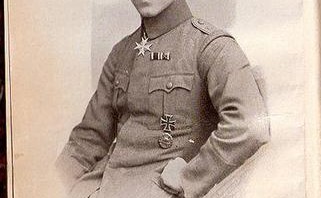
Just about everyone has heard of Erich Maria Remarque’s All Quiet on the Western Front, it is the work of fiction about World War I. It has been made into a movie several times and is supposed to represent the inhumanity… Continue Reading →
Caesar’s Gallic Wars are a series of eight books that Caesar either wrote or had written detailing his actions during the eight years he was the Roman governor in Gaul. They are best understood as an exercise in propaganda… Continue Reading →
This is the text of a paper I wrote for my undergrad that I found yesterday while looking through the folders on my computer for something else and decided I would post here. It is not the best writing I… Continue Reading →
The weapons and techniques used throughout most of siege warfare are remarkably consistent with few innovations. The notable new weapons were the trebuchet, Greek fire, and Cannons. Â Â Â Â Â Â Â Â Â Â Â Siege towers or belfries were common if unwieldy weapons used at… Continue Reading →
Fortifications have existed since before recorded history and the Middle Ages were no different. Forts and castles were used throughout the Middle Ages as a means of controlling territory and could even be used in an offensive manner such… Continue Reading →