Page 29 of 35
This will be a series of posts laying out the general history of the major Fronts in World War I. The First World War was unnecessary in that if the diplomats of Europe had truly wanted to stop the war… Continue Reading →
The Conquest of Gaul tells the story of the Roman Conquest of what is now France, Switzerland, most of the Low Countries, and parts of present day Germany. It was written by Julius Caesar, the Governor of the Roman… Continue Reading →
All classical military theorists point out that military strategy and national policy are intermingled. Clausewitz devotes a lengthy portion of his treatise to the ways in which military action should serve the needs of the state; indeed, his most… Continue Reading →
The conventional explanation for why the Western Front in World War I settled into a stalemate is that the power of defensive weapons was stronger than the offensive methods employed. The theory is that the defensive potential of machine-guns,… Continue Reading →
Otto von Bismarck (1815-1898) was probably the most accomplished politician that Germany has ever produced. He was almost single-handedly responsible for the emergence of the nation of Germany during the nineteenth century. He was appointed Prime Minister of… Continue Reading →
This book is an interesting read to say the least, Dr. Citino makes the case that there is a specifically German “way of warâ€. That way, is what he calls operational maneuver. He traces the development of this “way of… Continue Reading →
Polybius provides a detailed description of Roman Legionary equipment in Book VI of his Histories. He begins by describing infantry equipment and then describes the equipment of the cavalry and auxiliaries in turn. This post will concentrate on his description… Continue Reading →
On this day 66 years ago, Hitler did the world a favor and took his own life. Unfortunately, he should have done it in 1923 and saved the world upwards of 100,000,000 dead while he pursued his ambition of… Continue Reading →
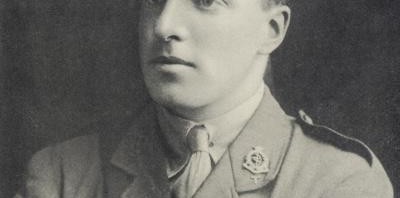
Cpt. Noel Chevasse is one of the three men who have earned the Victoria Cross twice. He was a doctor and earned both awards during the First World War. He won the first VC during the battle of the Somme… Continue Reading →
R2P means “Responsibity to Protect“, and is the idea that the “International Community” has an obligation to “prevent and stop genocides, war crimes, ethnic cleansing and crimes against humanity.” This obligation extends regardless of whether or not traditional national interests… Continue Reading →
Is there such a thing? That question hit me this morning as I was reading a book review in an old copy of the Journal of Military History. The book in question was Death of the Wehrmacht: The German Campaigns… Continue Reading →
Polybius provides a detailed description of the layout and organization of a Roman Legionary Camp in Book VI of his Histories. Rather than try to rewrite everything in the section on the layout of a Roman camp contained in Polybius,… Continue Reading →

From reading Polybius, I gather that the basic unit of the Roman Army was not the Legion, at least not in the days of the Republic during Polybius’ lifetime. Instead, it was the Consular Army, which consisted of two Legions…. Continue Reading →

I wrote a post about Saint John of Nepomuk a week or so ago and at the time I wanted to post a picture of the statue near my house but had been too lazy to stop on my way… Continue Reading →
The Death of Bin Laden, a Good Start
With Bin Laden dead, what next? It is a virtual certainty that terrorism will not stop because someone (even bin laden) who has been in hiding for the past 9 1/2 years was killed. Terrorism, specifically Islamic terrorism, is bigger… Continue Reading →