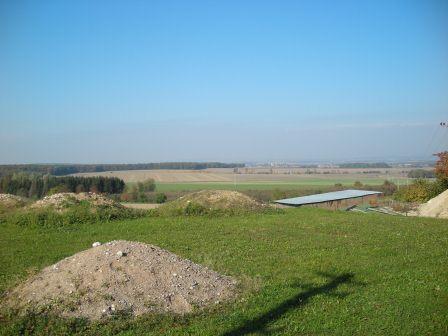
Königgrätz: Europe’s First Modern battle

At the beginning of July 1866, the almost evenly matched Prussian and Austrian armies met among the hills of the Bystrice valley in Bohemia.  The Prussians decisively defeated the Austrians and began the march to Empire that would culminate five years later with the Prussian victory over France and the establishment of Second Reich.  The consensus of history seems to be that the Prussian army won the battle of Königgrätz because they were equipped with the Dreyse Needle-gun while the Austrian army still carried muzzleloaders.  However, the Needle-gun was not the only new technology to prove itself during the Austro-Prussian war.  The railroad, which had proven so useful to America in the Civil War, was used to great effect by the Prussians to concentrate their armies for the invasion of Bohemia.  The Cast steel rifled cannon were also used by both sides, and the telegraph was used to great effect by the Prussian Chief of the General Staff Helmuth von Moltke to monitor the progress of the Prussian army.

            The battle of Königgrätz was not just a battle of competing technologies but also a battle of maneuver.  Moltke maneuvered the Prussian army to envelop the Austrians who in turn endeavored to avoid envelopment.  The efficiency of the Prussian General Staff system compared to the ineffectiveness and division in the Austrian army played a large part in the battle.

            It is too simplistic to argue that the rapid fire of breech loading weapons won the battle for the Prussian army.  The use of technology contributed to the victory but did not bring it about.  The Dreyse needle-gun, used by the Prussians at Königgrätz, contributed significantly to the Prussian victory but was not the single decisive factor historians claim; it was simply the most effectively used of the new tools for modern war.

            The Austro-Prussian War, of which Königgrätz was the decisive battle, was fought during a period in which technology and the organization of armies and states was in transition.  Prussia had not fought a war with a great power since 1815, when Napoleon was overthrown; the Prussian army had only seen action in limited wars and in the suppression of internal revolt prior to the Austro-Prussian war.

            In the years since Napoleon, the equipment of the Prussian army had changed, from smoothbore to rifled cannon, and from muzzle-loading smoothbores to breach loading rifles for the infantry.  These weapon improvements had greatly increased the range at which engagements began.  The Prussians had completed equipping their infantry with breech-loaders, but had only converted little more than half of their cannon to the new rifled models when the war started[1].  The Range differences between the available weapons were remarkable; smoothbores had a range of only 1500 meters while the rifled cannon could accurately fire over twice as far[2]

            The Prussian Army had the advantage of speaking a common tongue, which greatly simplified commands arrangements.  The Prussian army was also composed of long service conscripts and NCOs led by officers who were products of the excellent Prussian school system.  Prussian Army units were garrisoned in the region from which they drew there replacements and this made it both easier and faster to mobilize the Landwehr in time of war.  Finally, the average Prussian soldier was not only more educated than his Austrian opponent, but also had the advantage of serving with soldiers from his own home region.  The homogeneity of the Prussian army was one of its greatest strengths.

            The last great advantage enjoyed by the army of Prussia was its general staff system.  Helmuth von Moltke became Chief of the Prussian General Staff in 1858 and immediately began to reform the Prussian operational doctrine[3].  Geoffrey Wawro, in his recent history of the war, asserts that Moltke single-handedly turned the Prussian army from a gang of buffoons into a highly trained professional force[4].  This is a dubious claim at best, although Moltke was undoubtedly responsible for improving the General Staff itself.  Moltkes’ greatest contribution to the Prussian army was his brilliant strategic mind and the ability to visualize not only the battlefield, but also the entire theater of war and anticipate his enemy’s moves.  Moltke set the stage for the battle by his initial deployments and Benedek, the Austrian Feldzeugmeister, fell into the trap by doing almost exactly what Moltke wanted him to do.

            The Austrians had also made some strides in reequipping and modernizing their army.  As early as 1842, the Austrian army was experimenting with rifled cannon[5] and by 1866 had completed fielding rifled cannon to their entire army.  The Austrian artillery corps therefore had more experience and was more knowledgeable in the capabilities of rifled cannon than the Prussians were.

            The Austrian army had not progressed as far in the equipping of their infantry as the Prussians had.  Austrian infantry were armed with muzzle loading rifles that not only had a slower rate of fire than the needle-gun, but also were heavier.  The lack of an effective breechloader at Königgrätz would cost the Austrians dearly in casualties.

            The use of muzzle loading rifles affected the tactical employment of infantry that the Austrians used.  The Austrian army maintained the use of the line formation and troops using muzzle loaders were forced to stand to reload, thus remaining exposed to enemy fire.  Despite these shortcomings in equipment and doctrine, the Austrian infantry would fight stubbornly and only grudgingly gave up ground.

            The Austrian army was a polyglot force that reflected the ethnic make-up of the empire it was to defend.  There were regiments from all the ethnic groups of the empire, Romanian, Magyar, Czech, Polish, etc. in the army at Königgrätz, and they all spoke their native tongue.  The Austrian army used German as the language of command, but in peacetime, there were nine “languages of instruction”[6].  The ethnic mix and different languages used complicated battlefield employment to the point where it was at times impossible for commands to be understood simply because the troops did not understand what they were being told.  This mishmash of nationalities led to some units fighting well and some crumbling easily, not because the troops were cowardly, but simply because he trust of a homogenous army did not exist in the Austrian army of 1866.

            The final and perhaps most decisive difference between the Austrian and Prussian armies was the staff system.  It is more appropriate to speak of the lack of a staff system in the Austrian army.  There was a rudimentary General Staff in Vienna, but there was no central figure of the stature of Moltke in the Austrian army.  The North Army at Königgrätz had at least two army chiefs of staff at the time of the battle, Major General Krismanic and Lieutenant Field Marshal Henikstein[7].  Additionally Benedek, the commander did not have the will to impose his authority on his subordinates and his decision swung from one extreme to the other throughout the campaign.  The unfortunate result was a chaotic command situation in which orders were issued countermanded and re-issued so often and quickly that corps and division commanders did not know what to do.

            To understand the battle and its course it is first necessary to understand the terrain the battle was fought on and how that terrain shaped its course.  The Austrian army was positioned in between two rivers in western Bohemia, the Elbe, and the Bystrice.  The Austrian fortress city of Königgrätz was on the Elbe in rear of the Austrians and the small town of Dub just west of the Bystrice was there forward most position.  Along the Bystrice an arc of small villages from Nechanitz in the south Benatek in the north were on the bank of the river.  Behind the river on the eastern side, there were several small hills, which commanded the river line the most important of which, were at Popovice, Tresovice, Problus, and Prim.  In the north, several hills guarded the bulk of the Austrian army south of the line of the Trotinka River at Maslowed, Horonowes, and Sendrasitz.  In addition, there were commanding heights at Chlum and Lipa within the Austrian position from which the entire battlefield could be surveyed.  The last significant terrain within the Austrian position were several forests; the most important were the forests just east of Sadowa and north of Dohalice in the center of the Austrian position.  The town of Dub was on a small hill from which the King and Moltke would observe the Prussian army during the battle.[8]

            Thus, from the Austrian perspective the battle would be fought from the lips of an irregularly shaped bowl or more accurately, a Bunt cake pan.  The worst part of the terrain from both armies’ points of view was the lack of good roads in the area.  This would hamper both armies during the course of the battle, though perhaps it helped the Austrians by slowing pursuit after their defeat.

            The operational situation of July 3, 1866 could not have been better for the Prussians and it was equally bad for the Austrian army opposing them.  A cursory glance at a map showing the dispositions the morning of the battle dramatically illustrates the dilemma faced by the Austrian army.(See Figure 1)  The opposing armies were close to evenly matched in numbers, 240,000 Austrian to 250,000 Prussian[9]  At first glance it would appear that the Austrian army enjoyed the advantage of interior lines.  What one has to keep in mind though is that the Austrian army of almost 240,000 men was concentrated in an area only eight miles by four, and furthermore this area was supported by few roads and only one good road the Königgrätz to Jicin road.  This one good road in the Austrian rear ran east to west and thus did not facilitate lateral movement of reserves if the complicated command situation of the Austrians had even allowed it.

            The Prussians on the other hand had turned what was typical a bad situation, operating on exterior, into an advantage.  The Elbe Army of three divisions was approaching Nechanitz on the Austrian left flank.  The First Army of five divisions headed straight for the center while the four divisions, including the First Guards division of the Second Army was moving to the battle from the northern, or right flank of the Austrian position.

            The battle opened around 7:30 in the morning, with a long distance artillery duel between the Prussian and Austrian center divisions.  The Austrians fired first and their fire was effective causing many casualties especially among the Prussian cavalry[10].  The Prussians then attacked in force across the Bystrice River to the villages of Dohalice, Sadowa, and Makrowous.  The Austrian III Corps, though they lost crossings of the Bystrice, retained possession of the woods and high ground east of the river and inflicted significant casualties on the four Prussian divisions that attacked them.

            At 8:30 a.m., Herwarth’s Elbe army of three divisions began an attack on the Austrian left flank near Nechanitz, driving two battalions of the Saxon brigade of the Austrian VIII Corps over the river and through the town.  The Saxon’s retreated to positions on the heights between Lubno and Hradek where they would be budged until mid-afternoon.  After taking Nechanitz, Herwarth was content to engage in an artillery duel until assured of success in a renewed attack.[11]

            In the center, the Prussians continued to exert pressure but the Austrians, aided by terrain and their excellent artillery managed to hold the heights and even make rudimentary preparations for a counter-attack.  Shortly after noon, the Saxons counter-attacked and drove the Prussians almost back to Nechanitz.  In fact, VII corps was in the process of renewing their attack when the left wing fell apart through a lack of coordination.  This disorganized attack was routed when Herwarth, after receiving a direct order form Moltke, renewed his attack.[12]  This attack ran headlong into the failed Austrian attack and set the VII Corps to rout.

            The deciding point of the battle was the appearance between 2:00 and 3:00 in the afternoon of the Prussian second army on the unprotected Austrian right.[13]  The IV Corps and elements of the I Corps had been drawn into the fighting around Benatek and Sadowa and were thus not only out of position, but were facing the wrong way when the Prussian Guards division appeared at Horonowes.  The Guards quickly overran Horonowes and Maslowed and continued on to the heart of the Austrian position at Chlum and Lipa with the rest of second army following.

            With the appearance of the second army on the right and the renewed of advance of Elbe army on the left the Austrian army was faced with the prospect of a double envelopment.  Benedek’s first reaction was to attempt to eliminate the threat to Chlum by attacking.  X Corps, which was still uncommitted, began to retreat on the orders of Gablenz its commander at about 3:30.[14]  The rest of the Austrian army seeing the reserve leaving the field, voted with their feet and a general retreat began that soon turned into a rout.  The retreating Austrian army was hampered by a lack of bridges over the Elbe and difficulty in reentering Königgrätz whose commander refused to open the gates until 10:30 at night for fear that it was Prussians and not his countrymen outside the walls.[15]

            The battle of Königgrätz was undeniably a defeat for the Austrian army, but the question to ask is, what was the cause?  Was it in fact the needle gun that caused the Austrians to lose heart and quit the field, or was it the masterful maneuvering if the Prussian army under the direction of Helmuth von Moltke? 

            Before a determination of the major causes of the Austrian defeat can be made, a look at casualties is in order.  Casualty figures for both sides are generally accepted as being: Austrian, 24,000 killed and wounded and Prussian, 9,000 killed and wounded.  The numbers seem wildly disparate at first glance, but in reality, they are not.  At the Battle of Powick Bridge on September 23, 1642 during the English Civil War, the casualty ratio was nearly the same with primitive muzzleloaders.[16]  This was between armies that were almost evenly matched as the armies at Königgrätz. 

If anything, the casualty ratio at Königgrätz was more even than would normally be expected.  Historically the losing side in a battle suffers almost exponentially more casualties than the winner.  As far back as ancient Greece, this was true with the losing side suffering an average of 14% of the total force died compared to 5% for the victors.[17]  This proportion also held true throughout the Middle Ages, for example, at Agincourt the French suffered 6,000 casualties to 450 on the English side.  If we accept Craig’s figures of 5,793 Austrian and Saxon Dead and 1,929 Prussian dead and further assumes a fifty percent death rate among the missing, the percentages of dead on either side are not extraordinary.[18]  These numbers only give a death rate of 4.04% for the Austrians and 0.82% for the Prussians; these figures belie the so-called deadliness of the needle-gun.

Indeed, the casualty figures point to a different cause for the Prussian victory than the superiority of the needle gun.  The cause of the Prussian victory is easy if one discounts the supposed effectiveness of the needle-gun, and instead looks at a cause that has historically won battles, maneuver.  The Prussians sealed their victory in the afternoon with the appearance of the second army on the Austrian right flank, until then the Austrians had suffered some small losses but were generally holding their line and even had the hope of possibly launching a counter-attack in the center.  This situation changed radically with the appearance of the Prussian Guards at Maslowed between 1:30 and 2:00 in the afternoon.  The Guards appearance threatened the Austrians entire position, indeed the Austrians were quickly routed once the second army appeared.

In reality although the needle-gun proved to be effective in open field combat, in close and urban terrain its effectiveness was comparable to that of the muzzleloaders the Austrians were equipped with.  In the end, it was Moltke the Elder and the staff system he created which led to the Prussian unity of command that allowed the Prussians to outmaneuver the Austrian army and win the battle.

Many new technologies were deployed in mass for the first time in European warfare at Königgrätz, rifled cannon, the telegraph, and breechloading rifles.  All presaged the coming revolution in warfare but none by themselves, were decisive.  The Dreyse needle-gun, used by the Prussians at Königgrätz, contributed significantly to the Prussian victory but was not the single decisive factor; it was simply the most effectively used of the new tools for modern war.

Figure 1: Basic Dispositions of Austrian and Prussian Forces the Morning of 3 July 1866.  From Craig, Königgrätz & Wawro, Austro-Prussian War


Bibliography

Answers.com, “The Battle of Agincourt” http://www.answers.com/topic/battle-of-agincourt

Bennington, Mike. “The Rifle that Built an Empire” http://www.avalanchepress.com/NeedleGun.php

Craig, Gordon A. The Battle of Königgrätz: Prussia’s Victory over Austria, 1866. Philadelphia, PA: University of Pennsylvania Press, 1964

Craig, Gordon A. The Politics of the Prussian Army: 1640-1945. New York, NY: Oxford University Press, 1955

Friedrich, Otto. Blood & Iron: From Bismarck to Hitler, the von Moltke Family’s Impact on German History. New York, NY: Harper Collins, 1995

Greener, W. W. The Gun and its Development. London, UK: Arms and Armour Press, 1986

Hanson, Victor Davis. The Western Way of War: Infantry Battle in Classical Greece. Los Angeles, CA: University of California Press, 1989

Jensen, Geoffrey, Wiest, Andrew, eds. War in the Age of Technology: Myriad Faces of Modern Armed Conflict. New York, NY: New York University Press, 2001

Jobé, Joseph ed. Guns: An Illustrated History of Artillery. Greenwich, CT: New York Graphic Society Ltd., 1971

Morris, Graham J.  ”The Battle of Königgrätz” Battlefield Anomalies http://www.battlefieldanomalies.com/koniggratz/index.htm.

Murphy, Patrick. “The Effect of Industrialization and Technology on Warfare: 1845-1878” Military History Online. http://www.militaryhistoryonline.com/general/articles/effectofindustrialization.aspx

Retallack, James. “Why cant a Saxon be more like a Prussian?”: Regional identities and the birth of modern political culture in Germany, 1866-67.” Canadian Journal of History 32, no. 1 (April 1997) 26-55

UK Battlefields Resource Center, “Battle of Powick Bridge”  http://www.battlefieldstrust.com/resource-centre/civil-war/battleview.asp?BattleFieldId=35

Wawro, Geoffrey. The Austro-Prussian War: Austria’s War with Prussia and Italy in 1866. New York, NY: Cambridge University Press, 1996


[1] Craig, Gordon A. The Battle of Königgrätz: Prussia’s Victory over Austria, 1866, p. 8

[2], Ibid., pp. 18-19

[3] Craig, Gordon A. The Politics of the Prussian Army: 1640-1945, p. 193

[4] Wawro, Geoffrey., The Austro-Prussian War: Austria’s war with Prussia and Italy in 1866, pp. 12-13

[5] Jobé, Joseph. Guns: An Illustrated History of Artillery, p. 137

[6] Wawro. pp. 11-12

[7] Craig, Königgrätz, p. 15

[8] Ibid., pp. 87-88, Wawro,. p. 208

[9] Morris, Graham. The Battle of Königgrätz. Battlefield Anomalies, http://www.battlefieldanomalies.com/koniggratz/index.htm

[10] The Battle of Sadowa, The Times of London, July 10, 1866

[11] Craig, Königgrätz, pp. 97-99

[12] Ibid., pp. 123-128

[13] Wawro,. pp. 245-250

[14] Craig, Königgrätz, p. 142

[15] Ibid., p. 162

[16] UK Battlefields Resource Center, “Battle of Powick Bridge”  http://www.battlefieldstrust.com/resource-centre/civil-war/battleview.asp?BattleFieldId=35

[17] Hanson, Victor Davis. The Western Way of War: Infantry Battle in Classical Greece, p. 209

[18] Craig, Königgrätz, p. 166;  I divided the numbers of soldiers engaged as stated by Craig by the numbers of dead and missing, assuming a 50% death  rate to get the percentage of total deaths.  If one assumes that all the missing were dead then the number become Austrian, 5.67% dead and Prussian, 0.88% dead.  The numbers were calculated using MS Excel 2003.