
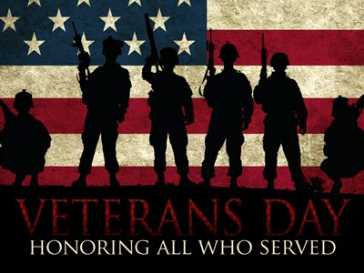
Happy Veterans Day! To all my fellow veterans, I say thank you for your service and dedication in protecting this great nation from her enemies, both foreign and domestic
[FULL DISCLOSURE: I received my copy of this book free from the author. I was not paid for this review and the opinion expressed is purely my own] Smithsonian Civil War: Inside the National Collection is an amazing look at the Civil War Era holdings of what many people call America’s Attic. The book itself is a large coffee-table glossy format and is 368 pages long with an object list and index. Each section starts with an explanatory note about the objects chosen to illuminate the theme. This is essentially a museum in a book. The sheer variety of items presented in this volume is amazing. What makes it especially interesting … More after the Jump…
[FULL DISCLOSURE: I received my copy of this book free from the author. I was not paid for this review and the opinion expressed is purely my own] Operation Barbarossa: Nazi Germany’s War in the East, 1941-1945 is one of those rare books about WWII written by a German historian and translated into English. That is not to say that there are not plenty of books in German about WWII and examining its myriad aspects, there are, it is just that most are never translated into English. There is generally a flood of new WWII histories every year and almost of all of them are written by English speakers. That … More after the Jump…
In the past 100 years man has gone from a man, to a killer ape, to a man again. I find it hard to believe that he ever was a killer or lover of mankind, but more like a hungry creature who needed a reason to do anything other than satiate himself. First of all, we don’t have evidence to prove that the Battle of Gaugamela was “a giant shoving match.” We do have evidence that modern soldiers have misfired their rifles on purpose in order to avoid shooting the enemy, but many conclusions can be drawn from this. I would argue that Europeans have gone through four stages in … More after the Jump…
Happy Veterans Day! To all my fellow veterans, I say thank you for your service and dedication in protecting this great nation from her enemies, both foreign and domestic
The following is an excerpt from The Sky Behind Me: A Memoir of Flying & Life. Taken from chapter 14, this piece is dedicated to my fellow veterans, of Vietnam and all wars Americans have been involved in through the years. For non-veteran readers, please keep in mind that returning GIs want nothing more than to be welcomed home, that politics and ideology play no part in that welcome. When I returned from Vietnam all those years ago I was expecting hostility, judgement, interrogation and doubt concerning my effort in that conflict, and my behavior in the war zone. Imagine my pleasant surprise when the following event took place instead. … More after the Jump…
Today’s generation can be forgiven for seeing the Second World War’s common participants as engaging in a battle of ideologies. That being said, the Waffen SS were the ultimate outsiders who became the ultimate insiders. During the blitzkrieg into Poland the Wehrmacht saw them as little more than auxiliaries, along for the ride. It is therefore interesting to appreciate the fact that the majority of the Heer were not ideologues, and therefore why they were capable of constantly putting up amazing fronts against an opponent (Russia) that outnumbered them 13:1. The German military predated the rise of national socialism and shared few values with the Fuhrer and his henchmen. German … More after the Jump…
The Medieval Fortress: Castles, Forts, And Walled Cities Of The Middle Ages is a good study of the art and methods of fortifications and castles built in Eastern and Western Europe during the Middle Ages from the fall of Rome to the early modern period. The book is right around 300 pages long and includes many illustrations. It also includes a glossary, which is very helpful to those that are not familiar with the technical terms for elements of castles and fortifications. It is separated into 5 chapters, the first deals with the elements of fortification, the next three are chronological about the development of castles and the final chapter covers … More after the Jump…
By the time the leopard-pelt donning Serbian mercenaries arrived in the commonwealth, the ferrous mines of Europe were in full bloom. No longer would the ancestral ingot change from plowshare to spearhead and back again under the same village smithy. The 17th century would see the rise and fall of heavy cavalry. The panoply of the mighty Polish Hussar would only come to rust when the musket was capable of penetrating plate mail, but this falls after our incursion into events past at this moment in time. Today citizens fear the idea of fighting two wars at the same time. In our peek into rustic Poland we shall find that … More after the Jump…
In the sixties ‘wheel of life’ folk song The Great Mandala, Peter Yarrow of Peter, Paul & Mary sings these lines: “Take your place on the great Mandala— As it moves through your brief moment of time— Win or lose now, you must choose now— And if you lose you’re only losing your life.” With this book, Coleman brings those words full circle, so to speak, delivering a rendition of his own life that, though marked by hardship and judgement, turns always toward a better day. Here’s the story of a man who took his place on that great wheel, and did not lose his life but gained a richer, better one. Even the title of the work evokes the turning wheel metaphor, in addition to other meanings.
I am afraid that the top side is not completely satisfied with my work… They are naturally disappointed that I failed to chase the Hun out of Italy but there was no military reason why I should have been able to do so. In fact there is no military reason for “Shingle”. – Major General John P. Lucas The Royal Fusiliers Company C were not the only men sacrificed for the imbibing hereditary duke beyond the Cliffs of Dover. The Battle of Monte Cassino and its sub theaters were a great multicultural event. The last time so many nations had uplifted and hurled themselves at an object was … More after the Jump…
[FULL DISCLOSURE: I received my copy of this book free from the author. I was not paid for this review and the opinion expressed is purely my own] Giap: The General Who Defeated America in Vietnam by James Warren is one of those books that does not fit neatly into a category. It is part biography but even more it is strategic history. It does neither very well but taken as a whole it tells a very interesting story and presents the events it describes in a unique and thought provoking manner. To be fair, the author admits in the preface that getting hard information about what Giap actually did and … More after the Jump…
The Battle of the Nations in and around Leipzig, Germany from 16-20 October, 1813, was the culminating battle of 1813 and the last major battle fought prior to the fighting in France in 1814 before Napoleon’s defeat, abdication, and exile to Elba. It was the largest battle fought in Europe to that time with over 500,000 soldiers on both sides. The city of Leipzig spent millions renovating the huge memorial to the battle and planned a week of commemorations coinciding with the 200th Anniversary of the battle. This past weekend I went to the 200th Anniversary of the Battle of the Nations re-enactment. This was billed as the highlight of the … More after the Jump…
In Polish history, war usually comes down to two conflicting scripts. From the Polish side, pushing geographical boundaries out in all directions, as far as possible. From the opposing side: eliminating the irritating roadblock begrudgingly acknowledged as “Poland.” This theme is perennial. It has not only been steel and fire that has determined if the land of the White Eagle was to be a flesh and blood state, or merely a state of mind; it was also the petitioning of the fighting spirit through ideological appeal. Literature in Poland has served such a purpose. Polish literature is not meant to appeal to outsiders. It is generally so nationalistic that neighboring … More after the Jump…
Modern historians tend to overlook economic factors when investigating historical motivations. The first Northern Crusade (The Wendish Crusade), as commonly narrated, was a branch of the Second Crusade, undertaken on behalf of St. Bernard de Clairvaux’s furious pulpit outreach to retake the holy land. Ideological motivation is difficult to overlook when analyzing historical empires: the majority of empires and religions are so closely intertwined that it is almost impossible to separate them. This is true of Roman Catholicism no less than for the Vedic seers who wrote the Rig Veda, the Achaemenids who patronized Zoroastrianism, and the cult of Quetzalcoatl in Aztec Mexico. Early Islam and Maccabean Judaism are virtually … More after the Jump…
[FULL DISCLOSURE: I received my copy of this book free from the author. I was not paid for this review and the opinion expressed is purely my own] The Sky Behind Me: A Memoir of Flying & Life by Byron Edgington is the memoir of a helicopter pilot who began his flying career in the Army in Vietnam. I must admit that I though I would only find the parts about the tour in Vietnam interesting. I must further admit that I was completely wrong and am happy I was. The book itself is 296 pages long divided into 31 chapters. About 1/3 of the book is dedicated to learning to … More after the Jump…